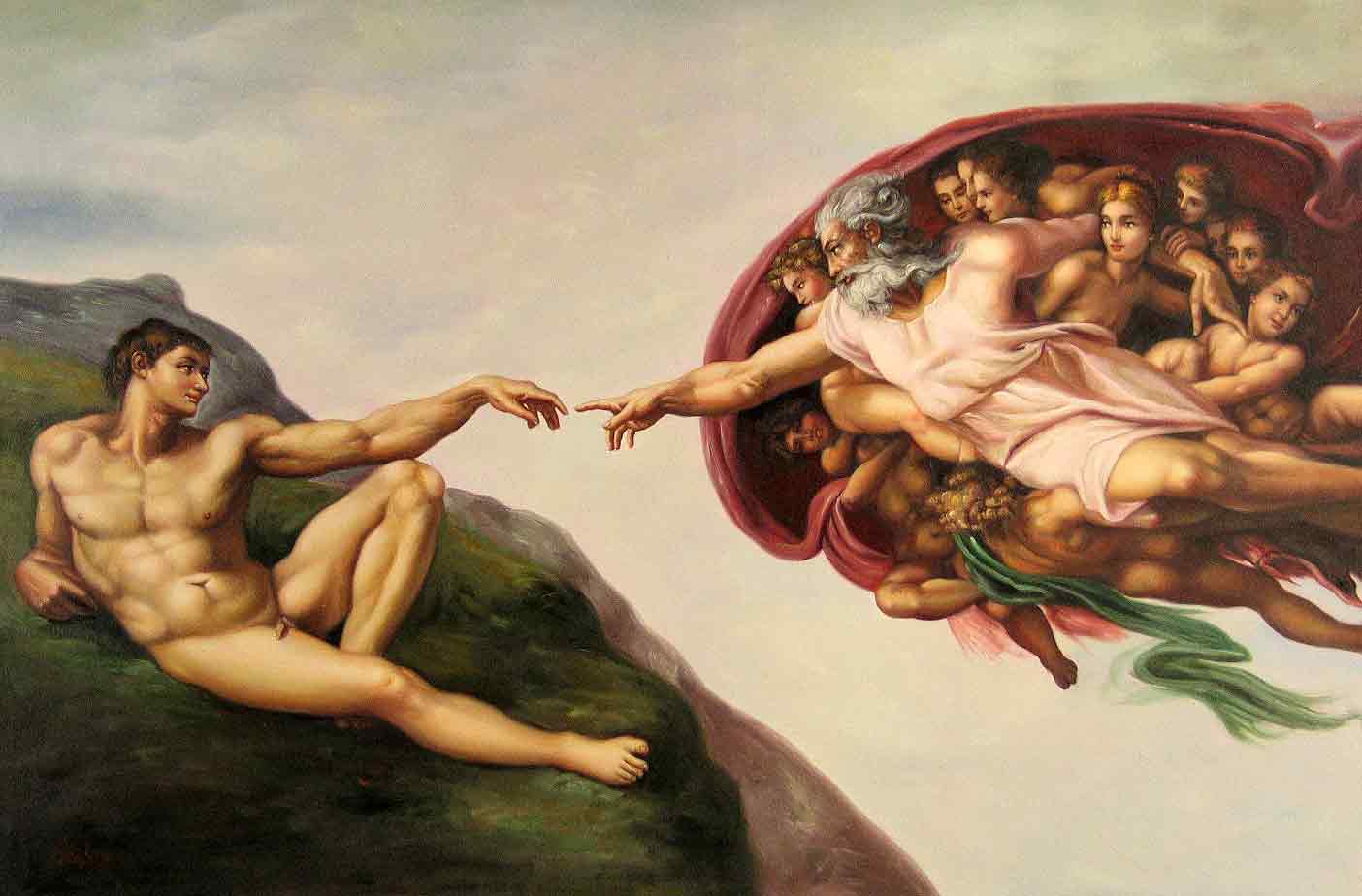
Ok, so it's not entirely to the artistic scale of Michelangelo, but this post is slightly important. I haven't posted in a few days due to a severe case of sickness, and I feel like it is important to cover the third mission statement of my blog: the Writer. Many people go their whole lives without stopping to consider just how much depth, how much thought, how much planning, time, heart, etc... goes into any work of art. People in our modern era consider themselves "connoisseurs" or "critics" by pointing out plot holes or character flaws or some other "clever" flaw left out by the author/director/actor/etc...However, these people should not be considered true artistic analyzers (unless they prove their artistic affinities otherwise).
Something that irks me slightly (although I was once a part of this category of people) is people who take a great movie and just destroy it by pointing out plot holes, logical fallacies, and other minor mistakes. Things that annoy me are simple things such as "When did Batman find the time to paint the bat on the side of the bridge?" or "Why don't they just ride the eagles?" Rather than simply enjoying the story for what it is, all the emotion, all the imagery, all the amazing shots, and all of the amazing writing that makes up the movie. Sadly, in our modern era, there are those who fancy themselves geniuses based from their abilities to point out small mistakes made in a movie or literature. Those people almost never understand the painstaking emotion, time, effort, creativity, imagination, and everything else that is poured into a work over years of time. I'm not saying stop viewing movies with a critical eye. Do not mistake my words, but if you're going to be critical about a movie, make sure it's not simply pointing out plot holes and fallacies. Make your arguments valid points of artistic or literary criticism based on study, analysis, and careful consideration of all the data.
Why am I writing about this at this point in time? Because recently I have seriously begun writing my novel, and it has forced me to see just how painstakingly difficult the creative process can be. Taking on this new point of view, I have gained a higher esteem for literary and cinematic artists for the time and effort they put into their art on such a grand scale, and it just annoys me now when others don't understand that process. Some people have actually made it a career to point out these "clever" observations to the world, and the worst part about the entire thing is that people believe that they are clever or intelligent or artistically inclined to do so. Just concluding, if you ever get into an argument with someone who tries to point something out to you (such as a plot hole or a fallacy or something) just speak to them about something intelligent and artistic to see if they can answer you.
We'll use spongebob as an example.

I once won an argument against my friend because he stated that spongebob "lowers the intelligence of the viewing audience", but I argued that it was the Neo-Progressivist, Postmodern representation of the modern day animated weekly feature. Basically, it is the show that takes everything a cartoon should be and goes completely against the canonical views in an attempt to criticize the cannon of the time. Because I sounded intelligent and was able to back up my statements with my near-encyclopedic knowledge of spongebob,

I was able to successfully refute his argument from an artistic and critical viewpoint. My point is, speak from an artistic point of view to separate the true critics from the "plot hole punchers" (as I call them). Do not allow yourself to become one of those people either; always view them as you would any other piece of art. As a object of beauty and entertainment to be enjoyed and studied for thousands of years after their creation.

Some great thoughts, Gary. You are right, there are people who will always be looking for the flaws in any great work. Just remember to separate positive criticism (the kind that seeks to help improve your work) from negative criticism (the kind that seeks to tare a work apart.) Remember we are all constant works in progress, and every artist is his worst critic because he sees all the flaws in his own work, and constantly seeks to improve on his work, even if others think it's perfectionism.
ReplyDeleteyes, I thought I had clarified that this was a criticism of those who pick out things simply as a negative influence rather than to provide artistic criticism, but yeah, There's always something that people don't like about a work.
Delete